Minutes exist so the organization can prove and remember what it did
A month after a meeting, people often remember the discussion but disagree about the conclusion. A year later, the original participants may no longer be available. Good minutes solve that problem. They give the organization a short, intelligible record of what happened and what is supposed to happen next.
That does not mean writing down every exchange. Minutes are a record of actions and decisions, not a transcript. The more a formal meeting matters to an entity, the more carefully the record should preserve attendance, authority, approvals, and the documents the group considered.
What belongs in minutes?
| Record element | Operating meeting | Board or member meeting |
|---|---|---|
| Date and format | Yes | Yes |
| Attendees | Useful | Usually essential |
| Quorum | Usually not needed | Record when required |
| Decision | Yes | Yes |
| Vote or consent result | Only if used | Record when formal action is taken |
| Action owner and due date | Yes | Yes |
| Verbatim discussion | No | No |
The governing documents and applicable law determine what a formal board or member record must contain. Ask counsel when the consequence of a mistaken record is material.
For a management meeting, the record can be compact: key decision, owner, due date, and any unresolved point. For a board, member, or committee meeting, add the information the organization needs to show the action was validly taken, including attendance or quorum when required, the motion or resolution, and the vote or consent result. The IRS governance guidance for 501(c)(3) organizations is a useful reminder that governance practices support an organization’s continuing accountability.
How detailed should board minutes be?
Board minutes should be specific enough to establish what the board considered and approved, but they should not recreate debate line by line. The organization needs a durable corporate record, not a novel. State the material action, the authority, the approval result, and any instruction to officers or staff.
If the decision depends on a report, contract, budget, or other material, link or attach the version considered. That makes the minutes useful during future diligence and keeps the evidence next to the decision. Our buyer diligence record guide explains why those connections matter long after the meeting ends.
Capture the record in the meeting, then approve it deliberately
- Start with the meeting date, type, and the people present or excused when that matters.
- Record each decision in plain language, including the authority or approval path used.
- Assign every resulting action to one owner and one date.
- Link the agenda, packet, resolution, vote, and supporting files to the minutes.
- Circulate a draft for the required review and approval process.
- After approval, preserve amendments as amendments instead of silently rewriting the past.
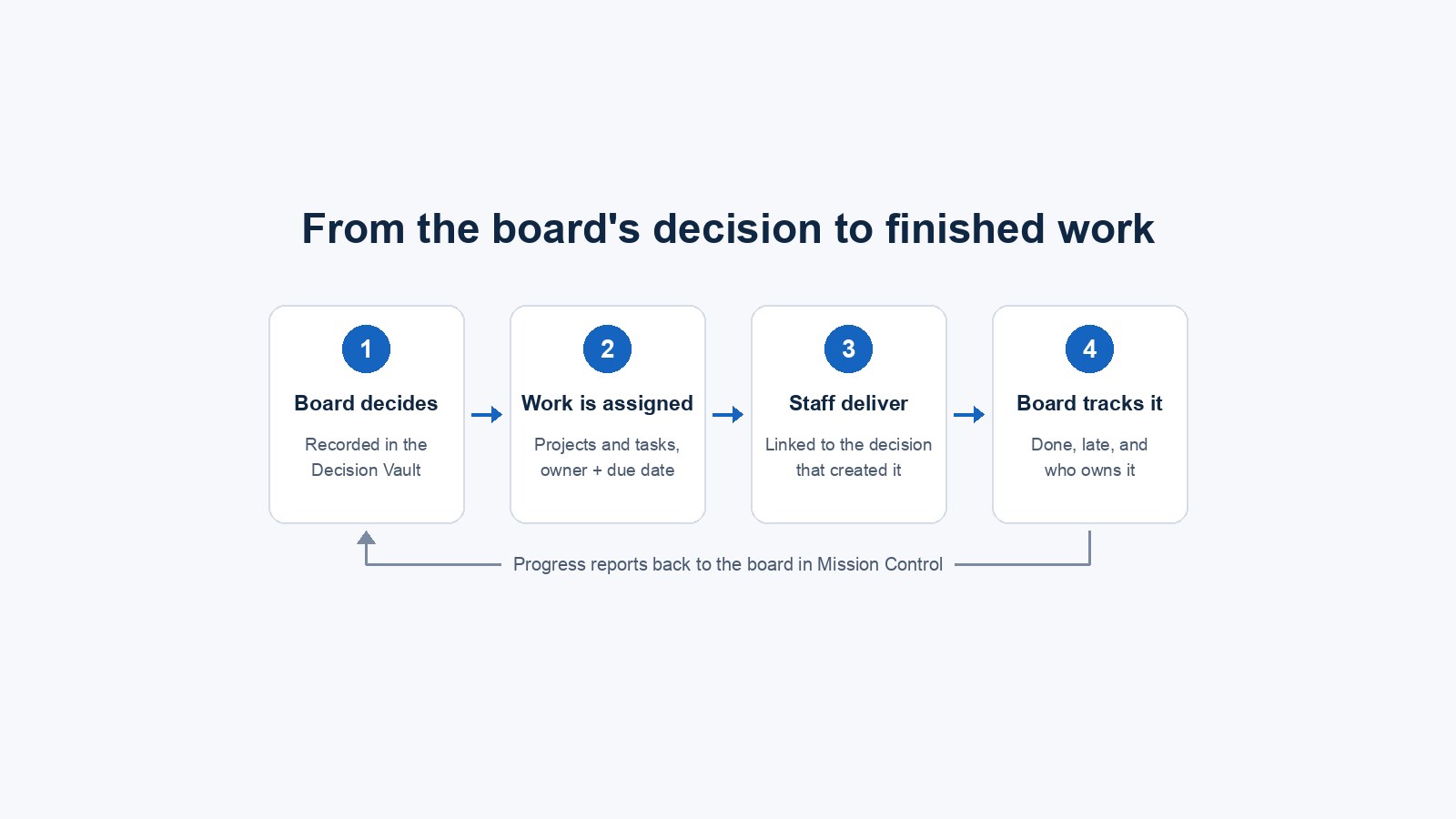
Meeting Engine keeps the agenda, packet, live record, and minutes together. Connect formal approvals to Decision Engine when your organization needs the resulting decision to be searchable alongside documents and follow-through.
Who should approve meeting minutes?
Follow the organization’s bylaws, operating agreement, board policy, or established meeting procedure. In many organizations, minutes are drafted by the secretary or notetaker and approved by the board or group at a later meeting. The right process depends on the entity and the type of meeting.